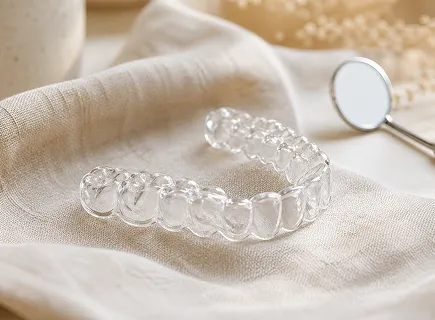


When Jaw Clicking Is a Signal — Not Noise
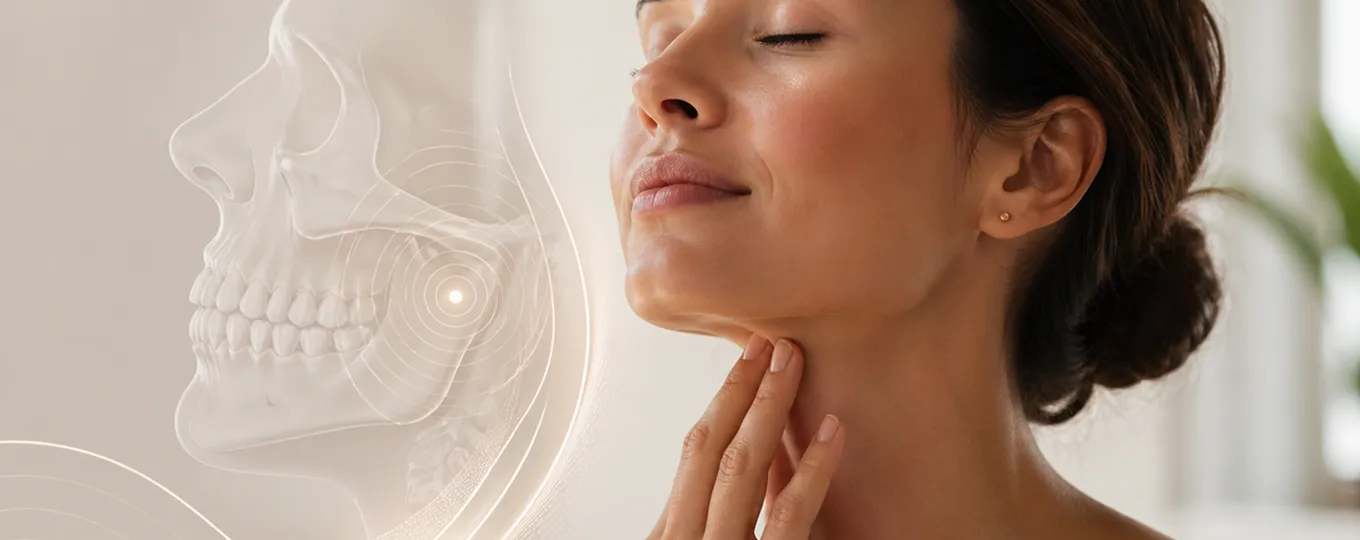
A click near the ear feels harmless at first - until it starts happening every time you open your mouth, eat, or yawn. When we assess the jaw joint, the goal is not "quick relief" but clarity: understanding what the joint is doing, why, and whether the symptom warrants intervention or simply careful observation.
What Patients Tell Us Before They Know the Diagnosis
Most people arrive with descriptions rather than terms. "My jaw snaps when I yawn." "One side feels tighter in the morning." "I get headaches behind my eyes after long meetings." These are not random complaints - they are functional signals. Grouped together, they show a joint system under strain, and they tell us which diagnostic steps are likely to matter.

Is Jaw Clicking Dangerous?
On its own, usually not. What matters is the type of sound:
- Clicking on opening only - often a disc displacement that reduces (returns to position)
- Clicking on both opening and closing - may indicate the disc is not fully reducing
- Crepitus (grinding sound) - associated with bone-on-bone contact or degenerative change
- Silent joints with pain - can signal a problem inside the joint (internal derangement) even without any sound
We don't treat sounds. We treat measurable dysfunction - once we know what belongs in the clinical picture and what doesn't.
If you recognize jaw noise that changes with fatigue, what you chew, headache patterns, or sleep quality - these are worth assessing together. Not because each symptom is alarming alone, but because clusters often point to a system under strain that benefits from structured assessment before irreversible changes occur.
When Should You See a Dentist About Jaw Clicking?
Jaw sounds alone are rarely an emergency. But if clicking is accompanied by restricted opening, morning stiffness that persists beyond 20 minutes, asymmetric chewing, or frequent tension headaches - these combinations are worth assessing with a specialist before they develop into something harder to reverse. A structured TMJ assessment takes roughly an hour and gives you a clinical picture rather than a guess.
Jaw Clicking That Keeps Returning?
A structured assessment gives you answers - not assumptions.
Indicative Starting Prices
For TMJ and Bite Assessment
Temporomandibular Joint Disorder Consultation (TMJ)
Jaw pain, headaches, bite imbalance
AED 750
Initial Condylography
Recording of jaw movements to guide TMJ treatment
AED 4 000
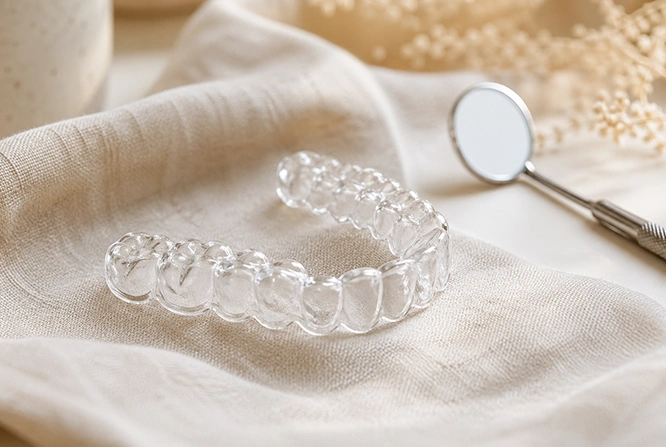
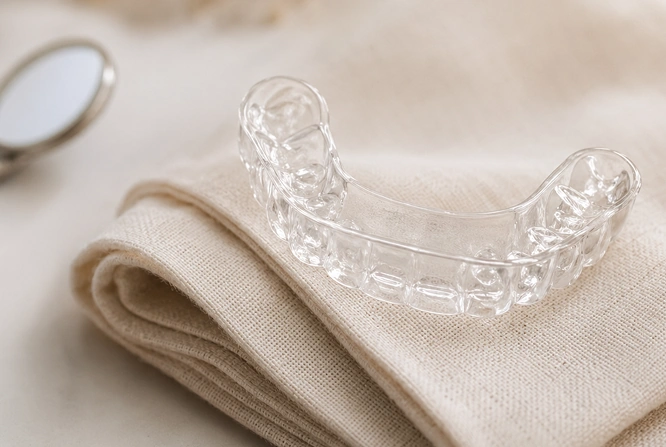
Occlusal Splint
Custom bite appliance to stabilize joints and protect teeth
AED 4 000
More to Read
on TMJ & Bite