

Splint or Night Guard? How TMJ Splints Work
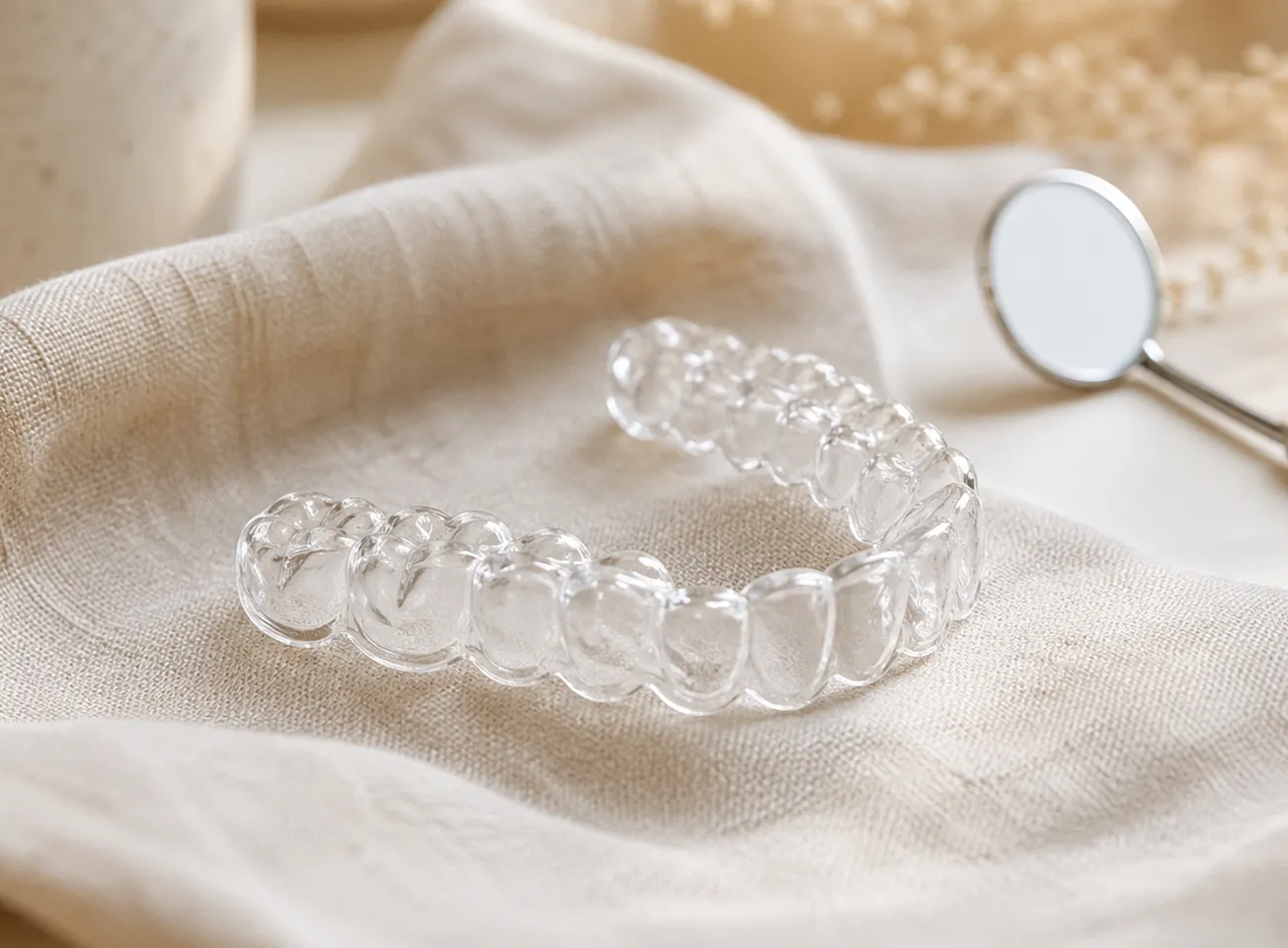
People often call a stabilization splint a night guard and assume it only protects the teeth. But for a jaw with overactive muscles, a displaced disc, or teeth that meet unevenly (occlusal interference), a correctly designed splint does something more specific: it stops the bite from dictating jaw position, so the muscles and joints can find a stable position on their own. The design and material of the splint, and how many teeth it covers, are clinical decisions - not just comfort preferences.
Types of TMJ Splints
- Michigan-style stabilization splint - covers all the teeth in one jaw, with a flat biting surface, made of hard acrylic; the clinical standard for relaxing the muscles and letting the jaw joints settle into a stable position
- Repositioning splint - holds the lower jaw forward so the condyle (the rounded end of the lower jaw that sits in the joint) moves back under a displaced disc; used only for specific disc problems, not as a long-term solution
- Soft night guard - cushions the teeth; does not address joint position or muscle dysfunction; suitable only for mild teeth grinding (bruxism)
- Anterior bite plane - a small plate over the front teeth that keeps the back teeth apart; worn for a short time to reduce the load on the jaw when pain flares up
How a Splint Also Helps With Diagnosis
Beyond symptom relief, a properly fitted splint is a diagnostic instrument. After four to six weeks of wearing a Michigan-style splint, the jaw settles into a stable, comfortable position in the joint, because your usual bite no longer forces it into place. That position becomes the target for any later treatment of the bite (occlusal rehabilitation). Without this step, crowns and other restorations may be made for a position the jaw has adapted to, rather than a natural one.
How the Jaw Feels When It Is Stable
Patients who respond well to splint therapy typically describe a change they notice gradually: the morning ache they had lived with for years is gone. Chewing on both sides feels even. The jaw clicks less often, or stops clicking. This change is more than comfort: it is a clear sign that the jaw has found a position where muscle tension and joint load are balanced. It tells us that any bite treatment that follows can start from a stable jaw position.
A splint does not fix the jaw. It creates the conditions under which the jaw can show us where it actually wants to be.
— MedPalm Clinical Team
Not Sure If You Need a Splint?
A TMJ assessment shows what your jaw needs - and what it does not.
Indicative Starting Prices
For TMJ and Splint Therapy
Temporomandibular Joint Disorder Consultation (TMJ)
Jaw pain, headaches, bite imbalance
AED 750
Occlusal Splint
Custom bite appliance to stabilize joints and protect teeth
AED 4 000
Initial Condylography
Recording of jaw movements to guide TMJ treatment
AED 4 000
More to Read
on TMJ & Bite